I’ve been involved in a few discussions around the newly announced contact center offering by Microsoft – The Dynamics 365 Contact Center.
The questions mainly focus on one factor: What is it? Is this just Omnichannel rebranded or is it a new product? In this blog I’ll answer this question and explain where this fits in the Dynamics 365 and Microsoft 365 world.
What is a CCaaS
To fully answer the question, I’ll need to explain what a CCaaS solution is and the journey Microsoft have been taking.
So, what is a CCaaS solution?
A CCaaS solution, or Contact Center as a Service is a solution that enables businesses to manage customer interactions across multiple channels, such as voice, chat or social media.
A CCaaS solution typically includes:
- The ability to integrate with the business’s CRM system to provide a seamless customer experience.
- The ability to route to agents using factors eg skills, availability, language and priority.
- The ability to schedule and manage contact center staff using shift management, forecasting, coaching and performance evaluation tools.
- The ability to proactively reach out to customers via the voice channel.
- Agent productivity tools which enables agents to get quick access to information based on the conversation’s context.
What is the value of CCaaS?
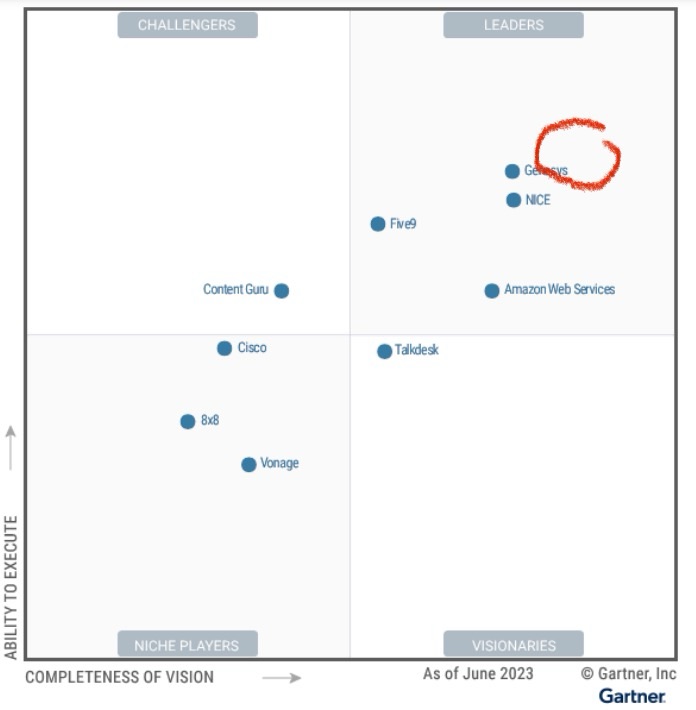
According to PR News Wire, The Cloud Based Contact Center Market is projected to grow from USD 26.2 billion in 2024 to USD 86.4 billion by 2029 and with names such as Genesys, Avaya, Five 9, Amazon Connect and NICE dominating the CCaaS conversation, Microsoft seems to have an aim to not only be a part of the conversation but to own the conversation.
Throughout the years, Microsoft has added to their contact center story. However, before now they were never deemed a CCaaS product. The reason? They have always been tethered to a CRM and could not before be officially connected to any CRM system – a core requirement which determines if a product is CCaaS or not.
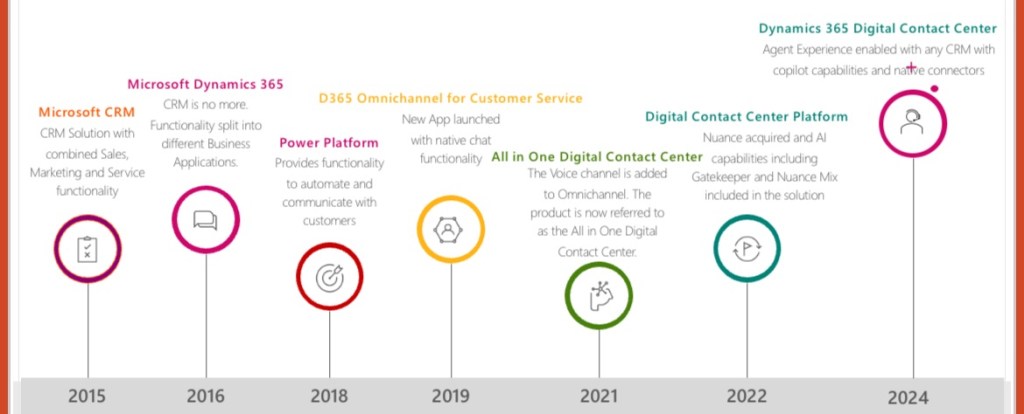
Microsoft’s journey to CCaaS is well documented and is at least 5 years old. Capabilities such as Unified Routing, Agent Deskfop, Digital and Social channels and automation via macros and Power Automate have been included in Microsoft’s product since the introduction of Omnichannel for Customer Service 5 years ago.
The voice channel came later with the introduction of the All in One Digital Contact Center and had well documented challenges which I’m happy to report have been addressed with continuous and persistent performance improvement being made via the Microsoft team.
The digital contact center introduced the Nuance platform to the product suite as well as copilot in service which applied agent assist capabilities such as suggested response, case, conversation and timeline suggestions and email draft using generative ai. Microsoft’s own case study follows their copilot in service journey and experience.
The digital contact center platform was a modular solution which allowed :
- businesses to invest and implement channels which allowed them to meet customers expectations of convenient interactions.
- An omnichannel experience to be enabled where the experience for customers and agents are consistent irrespective of the channel engaged.
- An improved routing experience based on a variety of routing types. For e.g. skills based routing, effort based routing, sentiment based routing, preferred agent routing and others. This helps to increase reduce the number of incorrectly assigned conversations or records
- Unified analytics using conversation data to evaluate and gain insights from trends identified and displayed in the reports available.
These are just some of the benefits based on the digital contact center platform. However, it was a challenge because – we needed Dynamics 365 Customer Service Enterprise. This has a financial impact but also a solution implementation impact if the customer already had a CRM system.
So what’s the change, is it new or not?
Well yes and no.
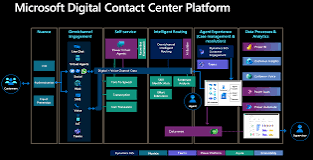
Referring to the architecture diagrams that became available at the time of GA, the easiest way to compare is by looking at what is available in the scenario where a company chooses to utilise Dynamics 365 Customer Service in addition to Dynamics 365 Contact Center.

This architecture probably looks similar to that of what we’ve seen before – and it is. It is a replica of what was available in the Digital Contact Center platform.

Comparing this with a company who has an existing CRM which they would like to keep BUT would like to utilise Dynamics 365 Contact Center :
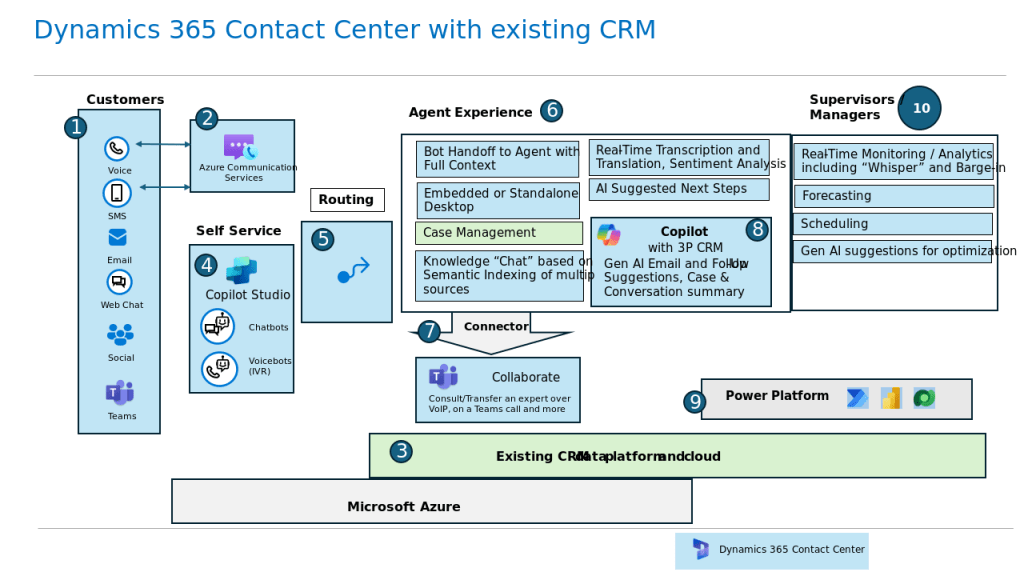
To further elaborate, there are a lot of new capabilities that are available with the Dynamics 365 Contact Center product and not available in Dynamics 365 Customer Service or the traditional Digital Contact Center Platform:
⁃ Native Connectors to Salesforce and Service Now: https://learn.microsoft.com/en-us/dynamics365/contact-center/administer/configure-salesforce-connector
⁃ Contact Center Workspace : https://learn.microsoft.com/en-us/dynamics365/contact-center/use/ccw-overview
⁃ The embed experience for Salesforce and coming soon – other CRMs: https://learn.microsoft.com/en-us/dynamics365/contact-center/administer/set-up-embedded-experience
There are also features which have changed or no longer available. For eg. The Customer Service Historical Analytics dashboard and the Contact Center Admin Center.
And other features such as the channels, knowledge management and routing capabilities which have stayed consistent across both areas.
In this way, it technically is a new product. However, it’s a product that is based on the omnichannel/digital contact center solution we’ve all come to know and love.
What are your thoughts on the new Microsoft Dynamics 365 Contact Center product?
 Everything D365